
DVH17 ORIGIN
PERFORMANCE LOGIC BEHIND THE DVH17 PATHWAY
CONTINUOUS LEARNING.
CONTINUOUS DEVELOPMENT.
CONTINUOUS PROGRESSION.
Every performance philosophy has an origin.
Ours is grounded in years of experience across two different high-performance environments:
International Show Jumping
International Junior Motorsport.
Both developed a trained eye and feel for performance, and for what sits behind Performance Output.
FOUNDATION BEFORE PERFORMANCE
There is an old saying in equestrian sport:
NO FOOT, NO HORSE.
Performance depends on the system’s ability to support what is being asked of it.
As riders, we know the topsport mentality.
When we fall, we get back on. It is part of equestrian culture — back in the saddle before fear and uncertainty can grow.
A fall can disturb the connection between horse and rider — trust, timing and confidence.
THE HORSE-RIDER COMBINATION HAS TO RECOVER AS WELL.
And when we are injured ourselves, we often get back on too soon — before our own Recovery is complete.
BUT WHEN IT IS THE HORSE THAT GETS INJURED, EVERYTHING CHANGES.
We become much more precise. We bring in the right expertise, carefully rebuild Performance Capacity and monitor the response to load as Recovery progresses.
Even during injury, the horse cannot simply be put aside. What it can do changes, but movement and progression continue within what Recovery allows.
AND YET, WHEN THE ATHLETE IS NO LONGER OURSELVES, WE SUDDENLY TAKE RECOVERY VERY SERIOUSLY.
But that precision is not reserved for Recovery. It is how we approach Performance too.
To anyone outside equestrian sport, we probably look rather funny during the course walk before a competition — taking these unusually large steps around the arena.
THIS IS NOT A CATWALK.
During the course walk, we determine our Ideal Line. We literally walk the exact line we want to ride, assessing the distances and measuring them in metres using those steps.
Then we get in the saddle.
We enter the course with our Ideal Line.
But once performance begins, the horse gives us new information.
The horse may react to something unexpected around the course. It may take off earlier or later than planned. What happens at one fence changes what we have underneath us for the next.
THE NEXT PERFORMANCE DEMAND HAS NOT CHANGED.
THE HORSE’S POSITION IN RELATION TO IT HAS.
After the landing, we reorganise the horse for the Performance Demand of the next fence.
We switch between lengthening the stride, maintaining the rhythm and shortening the stride.
Straight. Middle of the fence. Right distance for take-off.
That performance logic travelled with us from equestrian sport into motorsport.
FROM ONE HORSEPOWER TO MANY.
Different environment.
Different demands.
Same performance logic.
THE PERFORMANCE GAP
Recovery has a clear medical milestone:
MEDICAL CLEARANCE.
Medical Clearance means the driver is medically cleared to resume activity.
But Medical Clearance alone does not establish whether the young driver can perform physically, cognitively and mentally under the demands of Competitive Motorsport.
THE YOUNG RACING DRIVER IS IN BETWEEN TWO DIFFERENT WORLDS.
The Medical World, where the young driver is the patient.
The Race World, where the young driver is the racing driver.
At the same time, that Race Environment continues without them.
THE CHAMPIONSHIP CONTINUES. TESTING CONTINUES. OTHER DRIVERS KEEP DEVELOPING.
THE RACE TEAM IS BUILT TO RACE AND DEVELOP RACING DRIVERS. ITS RACING OPERATION CANNOT WAIT FOR AN INJURED DRIVER TO RECOVER.
It is not built to coordinate an individual multidisciplinary Return to Performance process around an injured driver.
THIS IS THE PERFORMANCE GAP.
For many young drivers and their families, injury or a race incident is their first experience of an intensive Recovery and Return to Performance process.
Without the right expertise and support, young drivers can be left to navigate this complex process while the demands of Recovery, Performance and Driver Development continue around them.
WHAT RECOVERY MEANS FOR THE YOUNG PERFORMER
For a young racing driver, recovery from injury or a race incident is a multi-layered performance process.
Medical Recovery is one part of that process.
Injury and race incidents impact a young driver far beyond the physical injury itself.
They can affect Physical Capacity, motorsport-specific fitness, cognitive and mental performance, confidence, and ultimately how a driver responds to speed, risk, pressure, and the demands of Competition.
At the same time, the young driver becomes isolated from the Race Environment.
Recovery becomes the immediate priority. The driver steps away from racing, while the Race Environment continues without them.
AND YET, THE YOUNG DRIVER REMAINS A DEVELOPING PERFORMER.
Physical, cognitive, mental and professional development can be interrupted by injury, but not everything needs to stop.
This creates a fundamental performance challenge:
RECOVERY MUST PROTECT WHAT NEEDS TO RECOVER WITHOUT UNNECESSARILY STOPPING WHAT CAN CONTINUE TO DEVELOP.
What is Recovered, Rebuilt and Developed during this period determines the Performance Capacity available for what comes next.
Different aspects of that process do not necessarily progress at the same speed.
Some recover.
Some rebuild.
Some adapt.
Some continue to develop.
RECOVERY DOES NOT FOLLOW ONE TIMELINE.
READINESS IN ONE AREA DOES NOT ESTABLISH READINESS ACROSS THE WHOLE DRIVER.
MEDICALLY CLEARED DOES NOT AUTOMATICALLY MEAN PERFORMANCE READY.
Performance Output may return while parts of the recovery process are still developing behind it.
The young driver must ultimately be ready not simply to drive, but to perform within the physical, cognitive and mental demands of Competitive Motorsport.
TWO PERFORMANCE RISKS
PREMATURE RETURN TO COMPETITION
During recovery, time carries a real performance consequence.
For a young driver, that creates pressure to return.
THE PRESSURE IS REAL.
The risk of returning to competition before the driver is sufficiently prepared for the physical, cognitive and mental performance demands of motorsport.
The risk is allowing the pressure to return to competition to move faster than the driver’s readiness to perform.
UNNECESSARY LOSS OF DEVELOPMENT TIME
The opposite performance risk also matters.
When time away from competition is not effectively organised and supported around the young driver, valuable Driver Development time is lost.
Recovery requires protection without requiring all areas of Driver Development to stop.
The difference is found in how Medical Recovery, Human Performance and Competitive Motorsport remain connected around the young driver.
FASTER IS NOT THE OBJECTIVE.
THE RIGHT PROGRESSION IS.
BUILD FROM EXPERIENCE
The DVH17 Pathway was shaped by what we learned through Dilano’s own recovery.
Following his first surgery, Dilano received Medical Clearance and returned to the race car within 15 days, competing in Monaco.
It was a Premature Return to Competition.
Recovery had its ups and downs, but Dilano continued to race and perform.
In Barcelona, he still stood on the podium.
But the persistent pain was not improving.
Straight from the podium, we went to the hospital.
Assessment showed that the screws securing the plate had broken. It also showed that the bone had not healed sufficiently.
THE PERFORMANCE OUTPUT WAS THERE.
But underneath that Performance Output, the Recovery was not where it needed to be.
At the same time, the pressure to keep racing remained.
We sought further medical opinions. We insisted on a third.
This time, we found an experienced sports trauma surgeon whose assessment gave us confidence in the way forward.
This ultimately led to a second operation.
During that operation, a bacterial infection was also confirmed.
Dilano remained in hospital for two weeks.
WE LEARNED THE HARD WAY.
The second Recovery process was different.
This time, the medical advice was clear: two weeks of rest before progressively rebuilding Physical Capacity.
Before returning to Competition, there would be another medical assessment, including new X-rays.
Recovery was no longer being measured only by whether Dilano could perform. His physical Recovery had to be reassessed before progression continued.
And the same Dilano had now shown us two different Recovery Processes.
That taught us something fundamental.
The same performer can Respond, Adapt and Perform differently as circumstances and Performance Load change.
Performance Progression is therefore individual not only to the young driver, but to where that young driver is at that moment.
RESPONSE, ADAPTATION AND PERFORMANCE DETERMINE THE PACE.
That experience became the foundation for how we approach the Performance Gap today.
It changed the way we looked at Return to Performance.
PERFORMANCE OUTPUT
Dilano’s recovery reinforced something fundamental in the way we look at performance.
PERFORMANCE OUTPUT DOES NOT ALWAYS REVEAL THE FULL HUMAN PERFORMANCE RESPONSE BEHIND IT.
In motorsport, what becomes visible in competition is the Performance Output.
Understanding what sits behind that output requires a wider Human Performance perspective.
It requires looking not only at what the young driver produces, but also at how the young driver responds, recovers and adapts to the Performance Load behind it.
WHAT THE DRIVER DELIVERS MATTERS.
WHAT SITS BEHIND THAT PERFORMANCE MATTERS TOO.
PERFORMANCE IS DEVELOPMENTAL
Young racing drivers are developing performers.
What can be handled today influences what can be developed tomorrow.
What is successfully adapted to creates the foundation for what comes next.
Development opportunities missed today cannot always be recreated later.
DEVELOPMENT IS PART OF PERFORMANCE.
RESILIENCE
Dilano’s determination to recover, rebuild and keep moving forward through setback was extraordinary.
RESILIENCE.
For us, resilience is part of the values Dilano carried throughout his development as a racing driver.
Today, that resilience remains part of the values carried forward through The Racing for Dilano Foundation.
THE ORIGIN OF DVH17
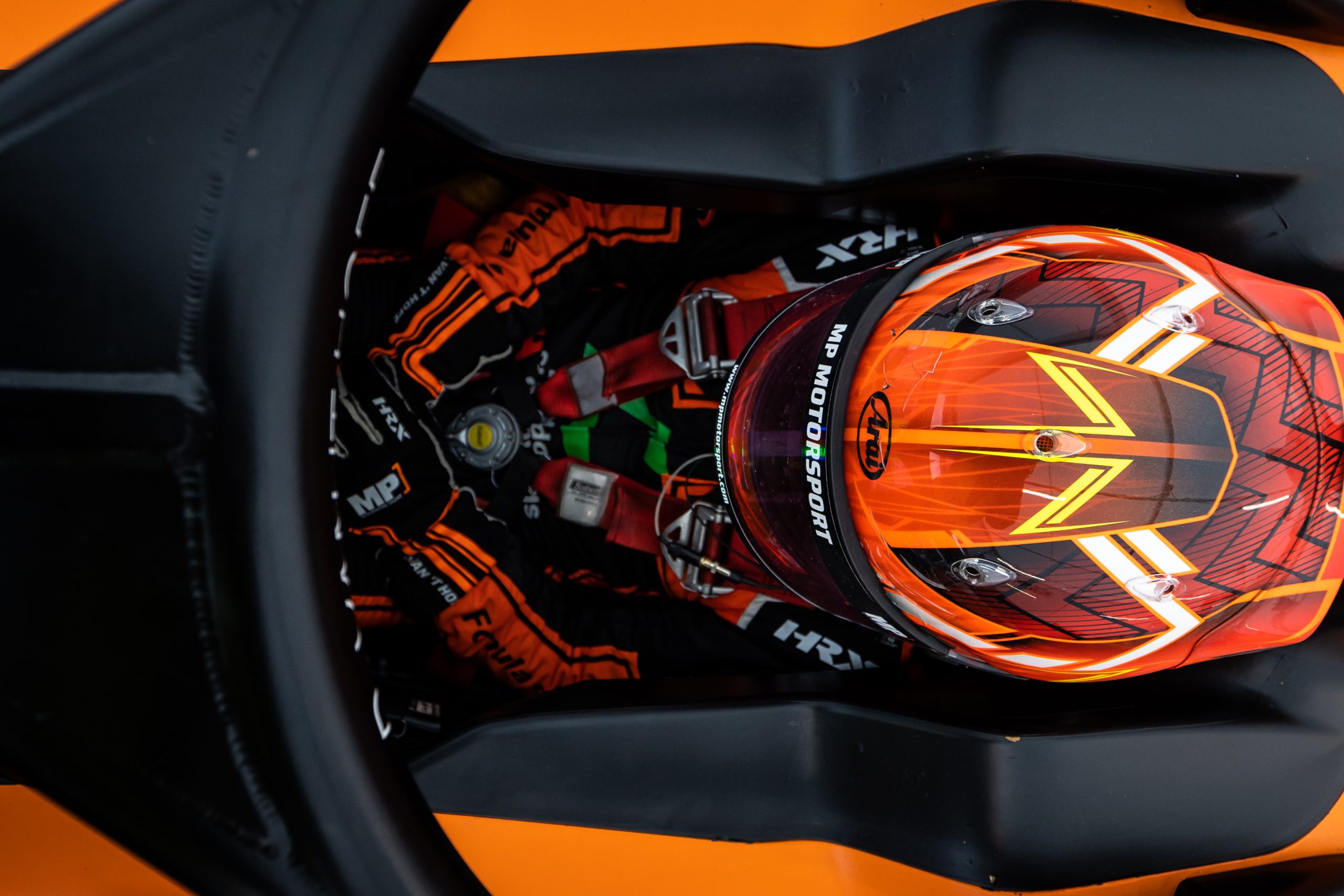
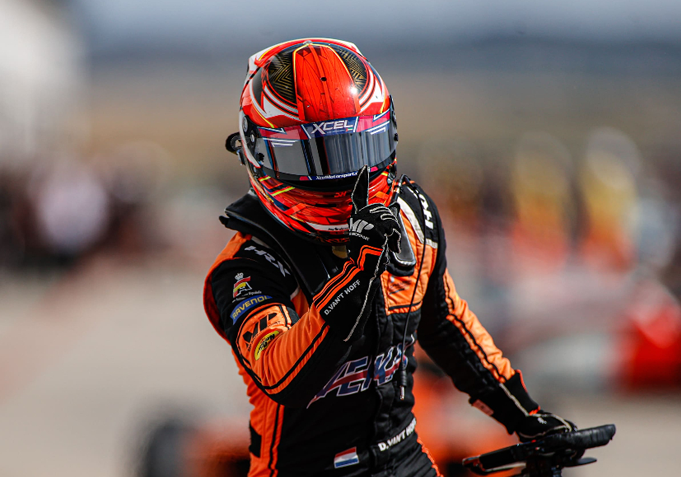
Within motorsport, DVH17 was Dilano van ’t Hoff’s racing identity on track.
Today, DVH17 carries that identity forward through the DVH17 Pathway, shaped by experience.
Continuous Learning.
Continuous Development.
Continuous Progression.
Development matters most when circumstances make it vulnerable.
WHAT HAPPENS BETWEEN INJURY AND COMPETITION MATTERS.
FROM DILANO’S RACING IDENTITY.
TO A PERFORMANCE LEGACY FOR THE NEXT GENERATION.
FROM TRIBUTE TO PRINCIPLE
Following Dilano’s passing, these words united the international motorsport community:
RACING FOR DILANO
Across circuits throughout Europe and beyond, those words appeared on race cars, karts, helmets and race suits.
Remembrance.
Respect.
Unity.
Dilano was curious.
He wanted to understand.
To learn.
To improve.
To keep moving forward.
Today, the Racing for Dilano Foundation carries those values forward for the next generation of young racing drivers.
DILANO’S HIGH-PERFORMANCE ENVIRONMENT
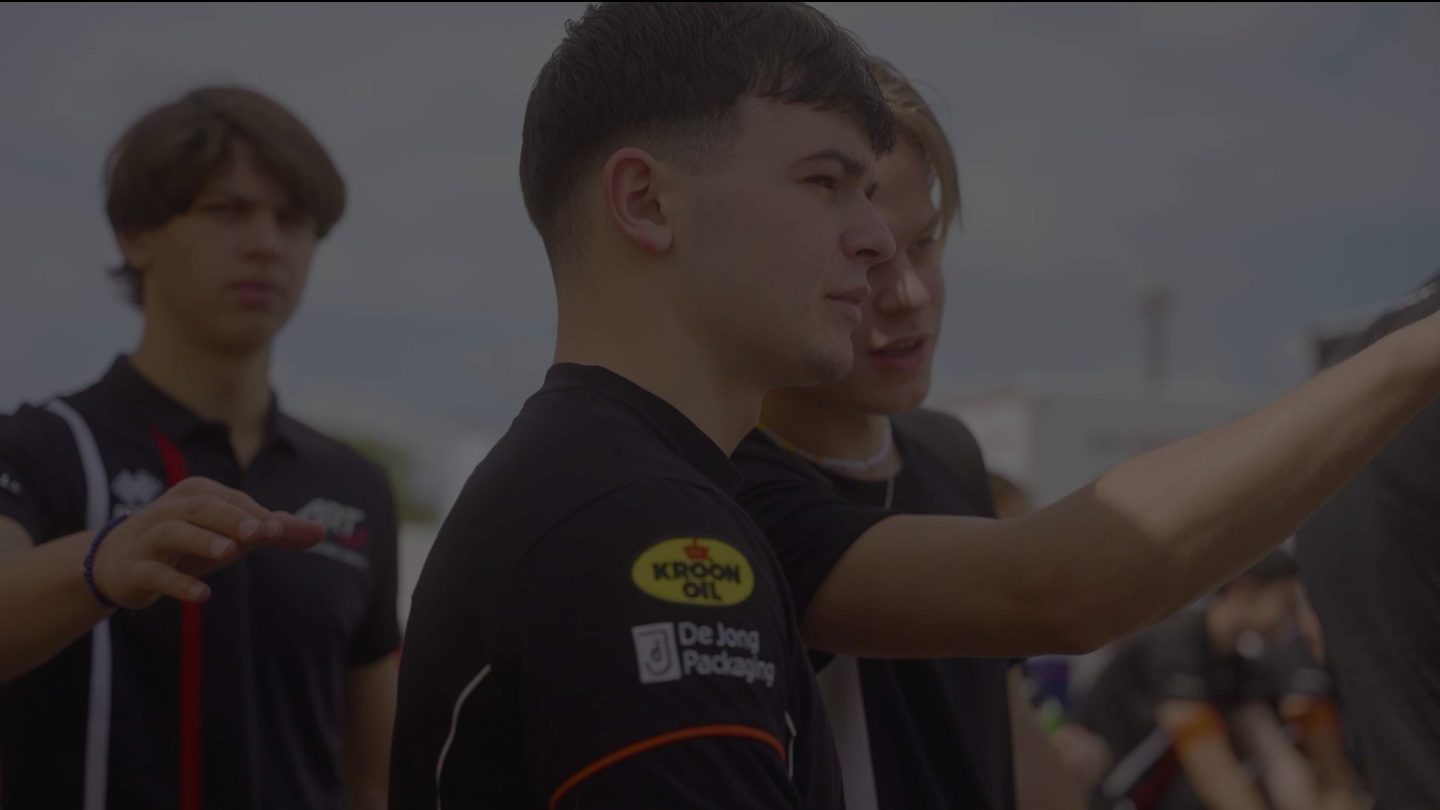
The video below provides a glimpse into the environment in which Dilano lived, trained and competed.
Discipline.
Preparation.
Teamwork.
Precision.
Performance.
Continuous Development.
The following tribute film was created by Dilano’s Race Team and shown during his memorial service.
ALWAYS ONE LAP AHEAD
Always One Lap Ahead carries a deeper meaning to us.
These words are deeply connected to Dilano and to the way we remember him.
They are part of the lagacy we carry forward.
Today, those words also carry meaning in the way we approch the development of young racing drivers.
Not as a demand to move faster.
But as responsibility to look ahead.
To understand where the young driver is today.
To understand what the young driver is recovering from.
To understanding what can continue to develop.
And to understand what competition will demand next.
Because preparing a young driver for what comes next starts before that next demand arrives.
CONTINUOUS LEARNING.
CONTINUOUS DEVELOPMENT.
CONTINUOUS PROGRESSION.